3D Printing Services
Functional 3D printed parts in engineering-grade filaments — jigs, fixtures, brackets, and replacement components built to work, not just to look like the model.
Based in Martinsville, Indiana — serving Indianapolis, Greenwood, Mooresville, Bloomington & Central Indiana, plus remote clients across the U.S.
Most 3D printing you see is decorative. This is not that. The parts that matter here go into machines, onto shop floors, under hoods, and out in the weather — parts that have to hold a load, survive heat, take a hit, and still fit next week.
DCD prints from Martinsville, Indiana and works with customers around Indianapolis, Greenwood, Mooresville, Plainfield, Franklin, and Bloomington, along with parts shipped in from further out.
Functional parts, not display pieces
A functional print is designed around how it will be used and how it will be made. That means choosing the print orientation so layers run across the load instead of along it, sizing walls and infill for the actual forces involved, building in clearances that account for how the material shrinks, and adding features where hardware needs to land — heat-set inserts, captured nuts, clearance for a socket to reach the bolt.
Printed plastic is anisotropic: it is meaningfully weaker between layers than along them. A part printed in the wrong orientation can fail at a fraction of its expected strength. Getting that right is most of the difference between a part that works and a part that snaps.
Engineering filaments
Material selection is driven by what the part has to survive, not by what prints easily.
PETG is the practical default for shop and general-purpose parts — tougher than PLA, reasonably heat resistant, and dimensionally stable.
ASA is the choice for anything living outdoors. It resists UV without going brittle and chalky, which makes it well suited to agricultural equipment, signage components, and exterior mounts.
ABS offers decent heat resistance and can be vapor smoothed, useful for enclosures and interior automotive parts.
Polycarbonate handles real heat and impact, for brackets and guards near engines, motors, and hot equipment.
Nylon and carbon-fiber-filled nylon (PA-CF) provide high strength, stiffness, and wear resistance — the right call for load-bearing brackets, gears, bushings, and fixtures that see repeated use.
TPU is flexible, for gaskets, bumpers, grips, protective feet, and vibration isolation.
PLA still has its place for fit checks and mock-ups, where the part only needs to exist long enough to answer a question. It is not a structural material, and it softens in a hot vehicle.
If you tell me the environment — temperature, sunlight, chemicals, load, and whether failure is inconvenient or expensive — I will recommend the material and say plainly if printing is the wrong process.
Where printing earns its place
Jigs, fixtures, and shop tooling. Drill guides, welding fixtures, assembly aids, alignment tools, and soft jaws. Custom tooling that would be uneconomical to machine becomes cheap and fast, and when the process changes, you print a revised version the same day.
Obsolete and replacement parts. Knobs, clips, housings, spacers, and trim for equipment nobody supports anymore. Paired with reverse engineering and part scanning, a broken plastic part becomes a model and then a replacement — often better than the original, since the failure point can be reinforced.
Low-volume end-use parts. When you need twenty of something, tooling costs cannot be justified. Printing covers that gap between a one-off and a production run.
Prototypes and fit checks. The fastest way to find out whether a design actually fits before committing to metal.
Patterns and masters. Printed patterns for casting, forming, and mold making.
Industries this fits
Automotive and powersports work needs heat and vibration resistance, which is where polycarbonate and nylon do well. Agricultural equipment lives in UV and weather, favoring ASA. Signage and architectural work uses printing for mounts, spacers, and internal structure. Shop and manufacturing environments get the most value from fixtures and tooling that adapt as processes change.
When printing is the wrong answer
Printing is not always the right process, and I would rather say so early.
Parts under sustained high heat, parts carrying heavy structural loads, parts needing tight tolerances across a large span, and parts required in the hundreds are usually better machined, cut, or molded. Because DCD also handles machining, sheet metal, and fabrication through a trusted network, the recommendation is not biased toward whatever machine happens to be free.
What you receive
The printed parts, along with the CAD they came from if the design work was done here, so you are never locked into one supplier for a part you own. Post-processing such as support removal, hole reaming, insert installation, and light finishing is part of the job.
Send a sketch, a model, a photo, or the broken part itself, and I will tell you what material I would use and why.
3D Printing projects
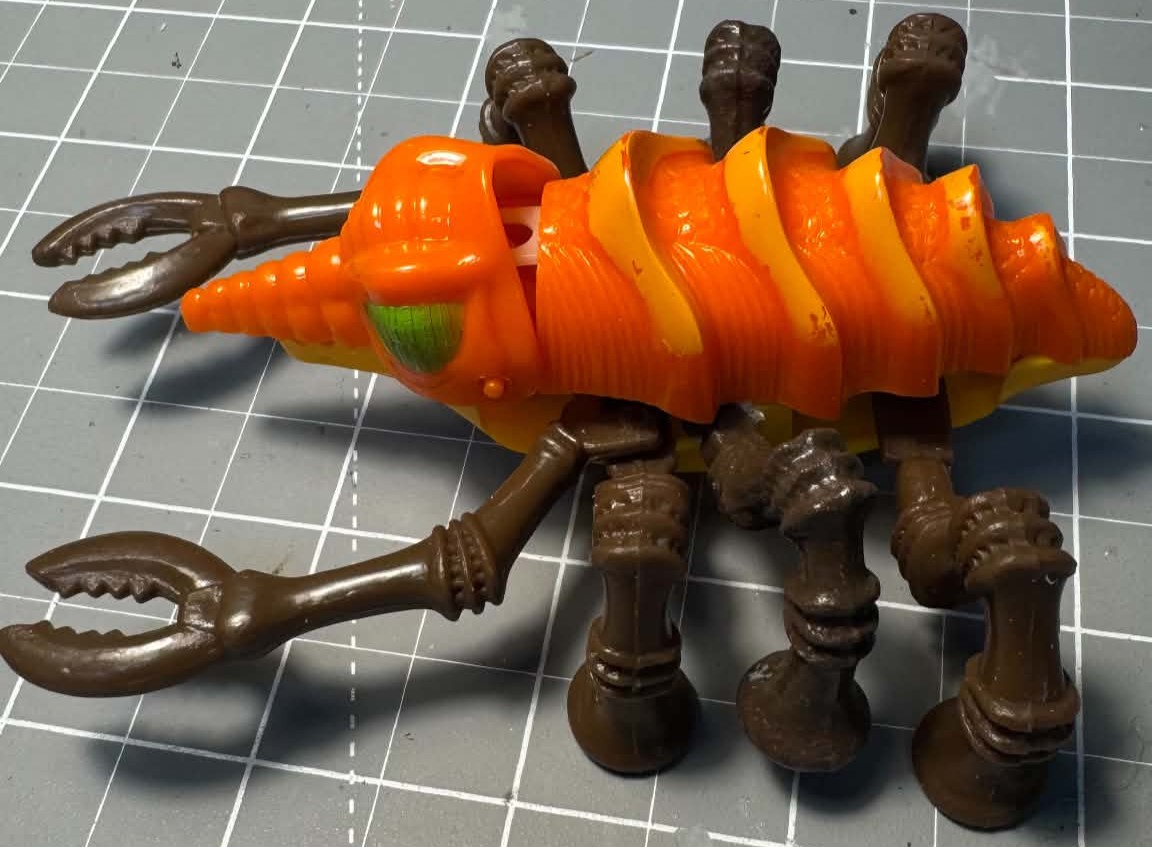
Have a 3d printing project?
Send a part, a sketch, or a scan — I'll tell you how I'd approach it.